This article covers Ideal EC levels for hydroponics. Electrical Conductivity (EC) is one of the most important measurements in hydroponics. It tells you how concentrated your nutrient solution is and whether plants are receiving the right amount of dissolved minerals.
If EC levels are too low, plants may suffer nutrient deficiencies. If EC is too high, roots can experience nutrient burn or osmotic stress. Monitoring EC regularly allows growers to maintain stable nutrient conditions and maximise plant growth.
In this article we explain what EC means in hydroponics, the ideal EC ranges for common crops, and how to measure EC reliably.
What EC Means in Hydroponics
Electrical Conductivity measures how well a liquid conducts electricity. In hydroponics, this conductivity comes from dissolved nutrient salts such as nitrates, phosphates and potassium.
The more nutrients dissolved in the water, the higher the EC reading.
EC is normally measured in:
- mS/cm (millisiemens per centimetre)
- µS/cm (microsiemens per centimetre)
For reference:
- 1.0 mS/cm = 1000 µS/cm
Because hydroponic nutrient solutions contain dissolved fertiliser salts, EC provides a quick way to estimate overall nutrient concentration.
Ideal EC Levels for Common Crops grown in Hydroponics
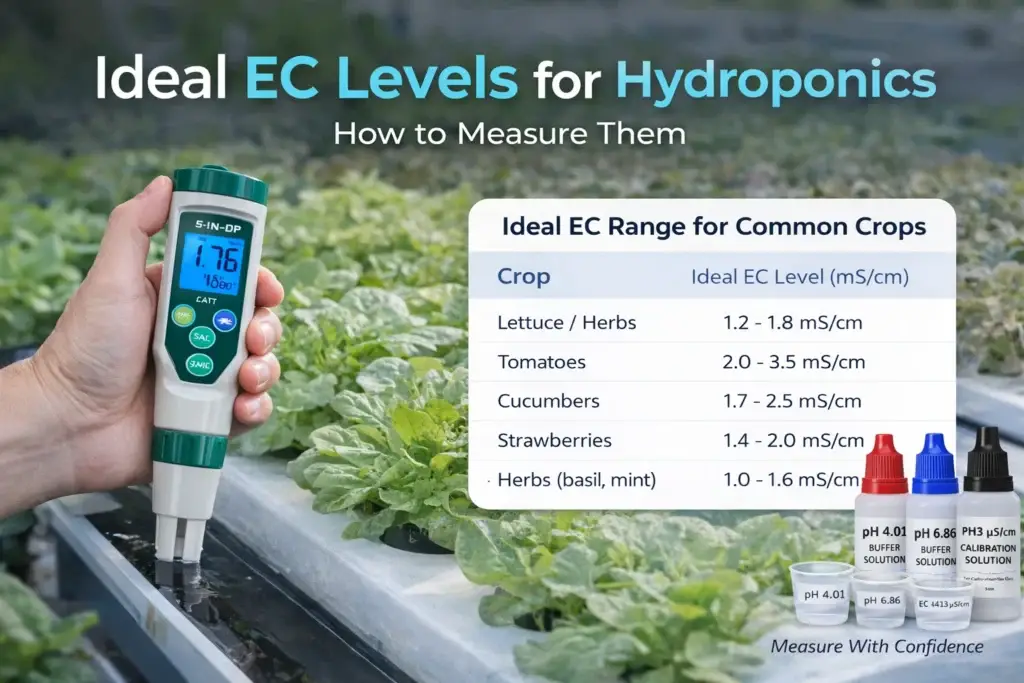
Different plants require different nutrient strengths. The table below shows typical EC ranges used in hydroponic systems.
| Crop | Recommended EC Range |
|---|---|
| Lettuce | 1.2 – 1.8 mS/cm |
| Spinach | 1.8 – 2.3 mS/cm |
| Strawberries | 1.4 – 2.0 mS/cm |
| Tomatoes | 2.0 – 3.5 mS/cm |
| Cucumbers | 1.7 – 2.5 mS/cm |
| Peppers | 2.0 – 3.0 mS/cm |
| Herbs (basil, mint) | 1.0 – 1.6 mS/cm |
These EC ranges are widely used as general guidelines for hydroponic nutrient solutions, although optimal levels may vary depending on plant variety, growth stage and environmental conditions.
Young plants typically require lower EC levels, while mature plants often tolerate higher nutrient concentrations.
What Happens When the EC Levels In Your Hydroponics are not Ideal?
Maintaining EC within the correct range is critical for plant health.
EC Too Low
Low EC usually means the nutrient solution is diluted.
Possible effects include:
- slow plant growth
- pale leaves
- nutrient deficiencies
The solution is typically to add nutrient concentrate to increase EC.
EC Too High
Excessively high EC means the nutrient solution is too concentrated.
This can cause:
- nutrient burn
- root stress
- reduced water uptake
To correct high EC levels, growers usually dilute the nutrient solution with fresh water.
EC vs TDS – What’s the Difference?
Many growers encounter both EC and TDS measurements.
- EC measures electrical conductivity directly.
- TDS (Total Dissolved Solids) estimates the amount of dissolved minerals.
Most TDS meters actually measure conductivity and then apply a conversion factor.
For hydroponics, EC levels are generally considered the more consistent and reliable measurement.
How to Measure EC Levels Correctly
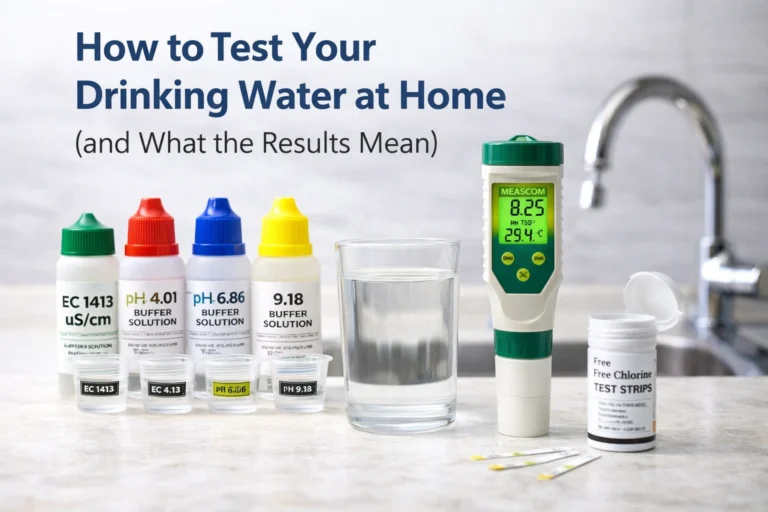
Measuring EC in hydroponic nutrient solutions is simple with a conductivity tester.
Typical measurement steps are:
- Rinse the probe with clean water
- Place the probe in the nutrient solution
- Wait for the reading to stabilise
- Record the EC value
For reliable results:
- calibrate your meter periodically
- rinse probes after use
- avoid measuring directly in fertiliser concentrate
Regular EC monitoring helps maintain a stable nutrient balance throughout the growing cycle.
Choosing an EC Meter for Hydroponics
For most hydroponic growers, a handheld EC or conductivity tester is the simplest and most reliable solution.
Typical options include:
- Handheld conductivity meters for more precise measurement
- Multi-parameter testers that measure EC, TDS and temperature.
Reliable instruments allow growers to monitor nutrient concentration accurately and maintain consistent crop performance.
Final Thoughts
EC monitoring is one of the most powerful tools available to hydroponic growers. By keeping nutrient concentrations within the correct range, plants can absorb minerals efficiently and grow faster and healthier.
With regular EC monitoring and occasional calibration, hydroponic growers can maintain stable nutrient solutions and optimise plant growth throughout the entire growing cycle.
pH is also an important measurement for successful hydroponics. You can choose a pH meter or a combined pH and EC meter in the Meascom shop
For further research read this article
Measure with confidence.