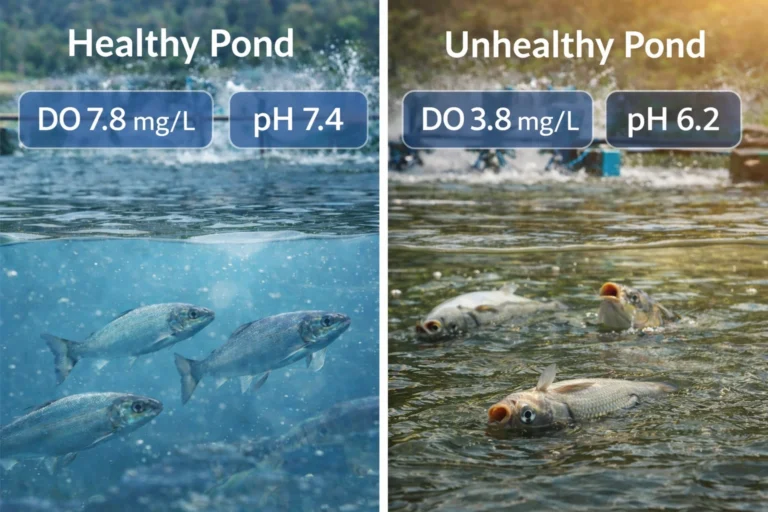

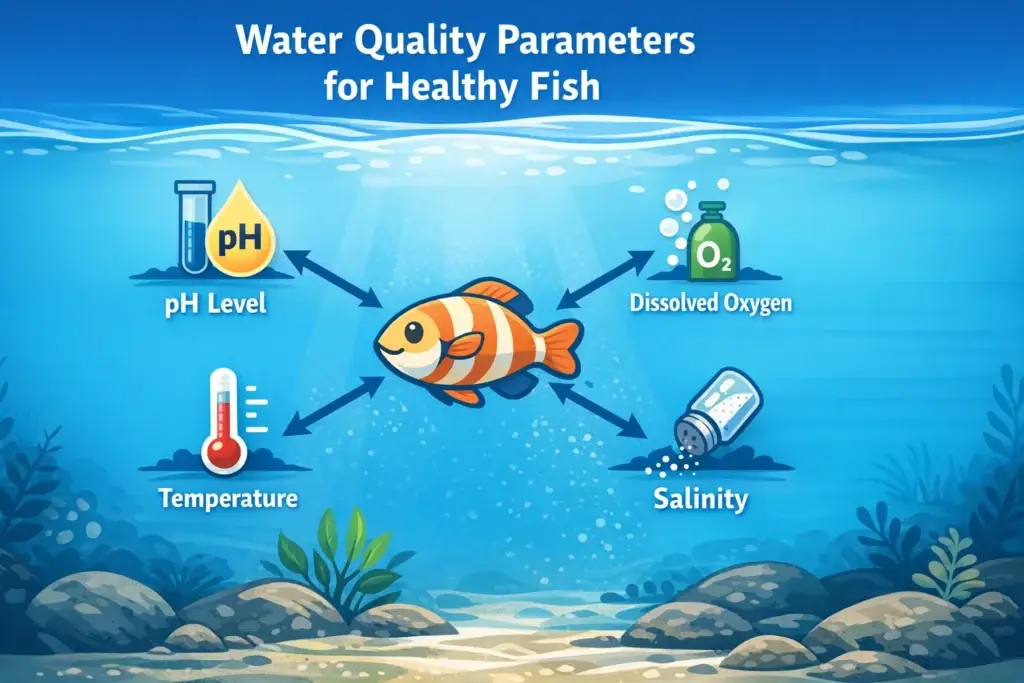
Safe water quality parameters for fish such as pH, dissolved oxygen, temperature and salinity determine whether aquatic environments remain healthy and stable.
pH, Dissolved Oxygen, Salinity and Temperature
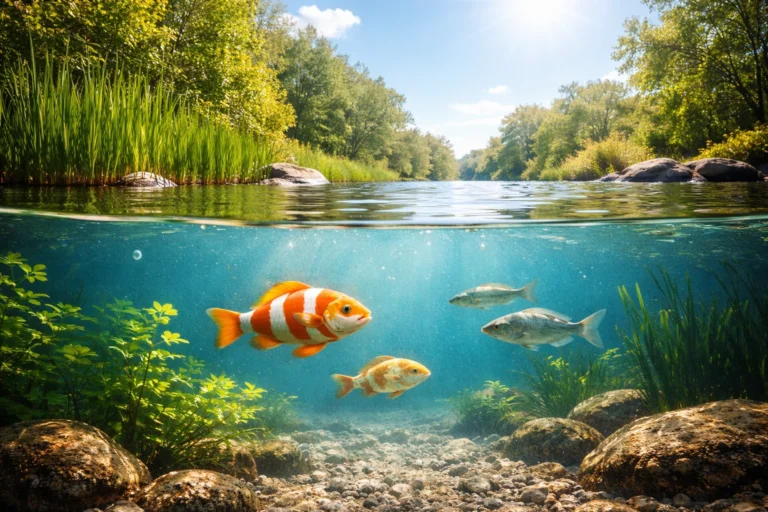
Maintaining suitable water conditions is essential for fish health and survival. Key water quality parameters such as pH, dissolved oxygen, temperature and salinity determine whether aquatic environments remain stable and capable of supporting fish.
Natural water bodies vary depending on location, season, biological activity and weather conditions. Regular monitoring helps detect changes early and allows corrective action before fish are affected.
This guide summarises typical safe water quality praameter ranges for fish in freshwater ponds, rivers, estuaries and marine environments.
Quick Reference – Water Quality Parameters for Fish
| Parameter | Safe Range for Most Fish |
|---|---|
| pH | 6.5 – 8.5 |
| Dissolved Oxygen | Above 5 mg/L |
| Temperature | 5 – 28 °C depending on species |
| Salinity | 0 – 35 ppt depending on environment |
Different fish species may tolerate slightly different conditions, but values outside these ranges can place fish under stress.
Freshwater Rivers and Lakes
| Parameter | Typical Range |
|---|---|
| pH | 6.5 – 8.0 |
| Dissolved Oxygen | 7 – 12 mg/L |
| Temperature | 5 – 20 °C |
| Salinity | <0.5 ppt |
Cool flowing water normally contains higher oxygen concentrations. Species such as trout require particularly well-oxygenated water.
Freshwater Ponds
| Parameter | Typical Range |
|---|---|
| pH | 6.5 – 8.5 |
| Dissolved Oxygen | 5 – 10 mg/L |
| Temperature | 10 – 28 °C |
| Salinity | <0.5 ppt |
Ponds can experience significant daily variation in oxygen levels. Warm temperatures and organic matter can cause oxygen to drop rapidly, particularly overnight.
Brackish Estuaries
| Parameter | Typical Range |
|---|---|
| pH | 7.5 – 8.5 |
| Dissolved Oxygen | 5 – 8 mg/L |
| Temperature | 15 – 28 °C |
| Salinity | 5 – 18 ppt |
Estuaries are dynamic environments where freshwater and seawater mix. Many aquaculture species are adapted to these changing conditions.
Marine Aquaculture Systems
| Parameter | Typical Range |
|---|---|
| pH | 7.8 – 8.4 |
| Dissolved Oxygen | 5 – 7 mg/L |
| Temperature | 18 – 28 °C |
| Salinity | 30 – 35 ppt |
Marine environments generally maintain stable salinity levels, which are important for fish and shellfish physiology.
Why Dissolved Oxygen Is Critical
Dissolved oxygen is one of the most important water quality parameters.
Low oxygen levels can cause:
- fish stress
- reduced feeding activity
- slower growth
- fish mortality in severe cases
Warm water holds less oxygen than cold water, which is why oxygen depletion events often occur during hot weather.
Organic waste, algae blooms and decomposing vegetation can also consume oxygen in water.
Learn how dissolved oxygen is measured in aquaculture and fish farming.
Why pH Matters
pH influences many chemical reactions in water and affects the toxicity of certain compounds.
Sudden pH changes can stress fish and interfere with biological processes such as respiration and metabolism.
Most freshwater fish prefer water within a pH range of approximately 6.5 to 8.5.
Why Salinity Matters
Salinity measures the concentration of dissolved salts in water. Fish regulate internal salt balance through a biological process known as osmoregulation.
Large or rapid changes in salinity can place fish under stress, particularly for species adapted to specific environments.
Signs of Poor Water Quality
Fish often show visible signs when water quality begins to deteriorate.
Common warning signs include:
- fish gasping at the water surface
- unusual swimming behaviour
- fish gathering near aerators or water inlets
- reduced feeding activity
- unexplained fish deaths
These symptoms may indicate low oxygen levels or rapid changes in water chemistry.
Measuring Water Quality
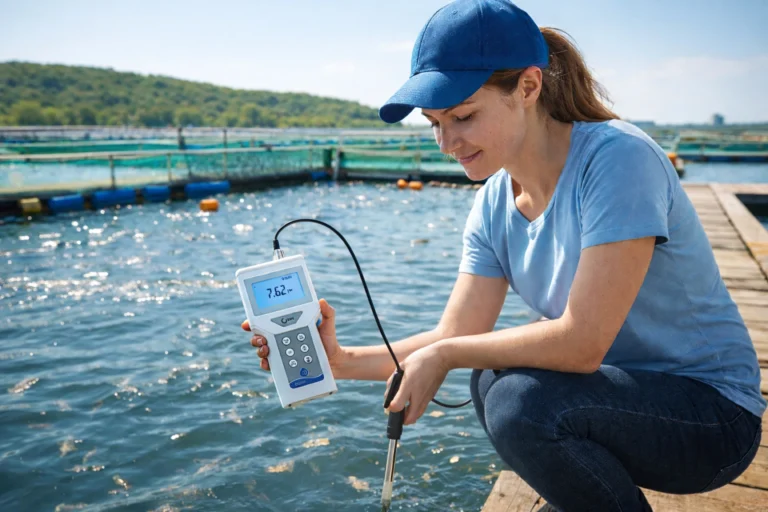
Monitoring water quality requires reliable instruments capable of measuring parameters such as:
- pH
- dissolved oxygen
- salinity
- temperature
Regular testing helps aquaculture operators, pond owners and environmental managers identify problems before fish health is affected.
Water Testing Instruments
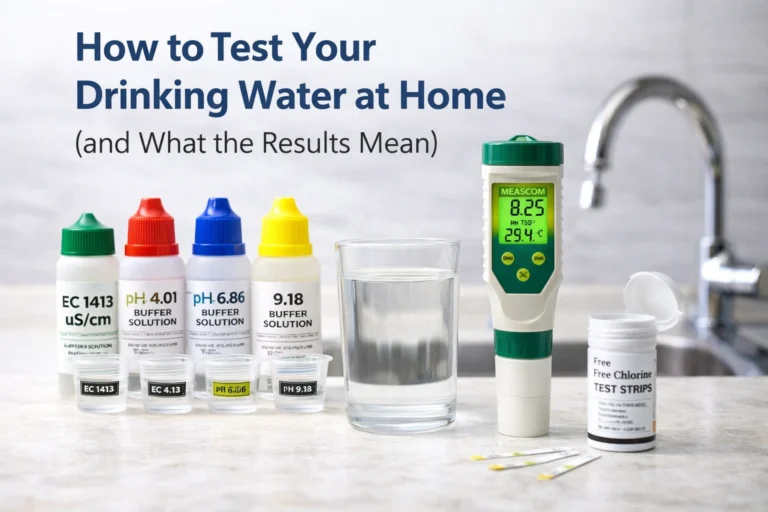
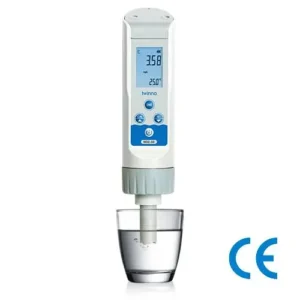
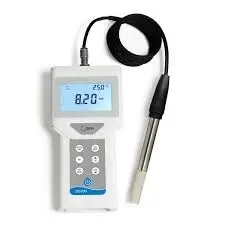
Water quality can be measured using a range of instruments including:
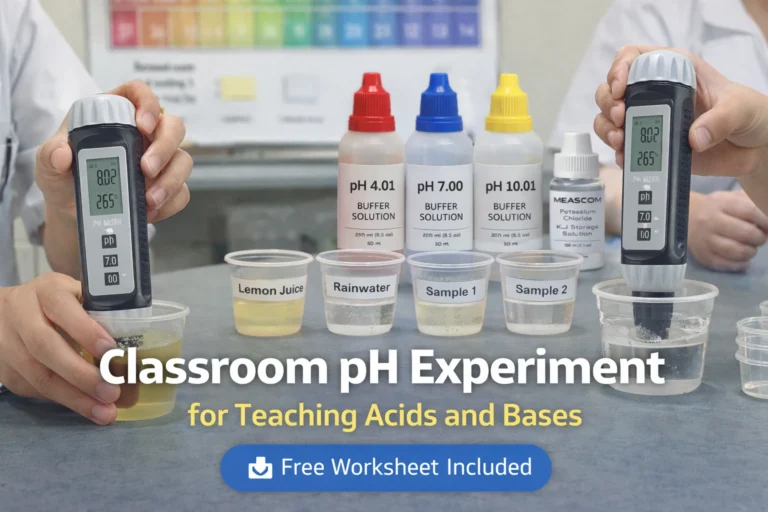
- pH meters for acidity and alkalinity
- dissolved oxygen meters for oxygen concentration
- salinity meters for salt levels
- nitrite meters for determining nitrite and nitrate concentrations
Accurate measurements require properly calibrated instruments and reliable reagents.
| Application | Instrument |
pH meter and buffers |
Salinity, Conductivity, TDS and PH |
|
|
|
Summary
Healthy aquatic environments depend on maintaining stable water quality conditions. Monitoring parameters such as pH, dissolved oxygen, salinity and temperature helps ensure fish remain healthy and productive.
To maintain safe watr quality parameters for your fish, it is imperative to regularly test the water. This rovides early warning of potential problems and allows corrective action to be taken before fish are affected.
For further reading seeAustralian Department of Climate Change, Energy, the Environment and Water