Introduction
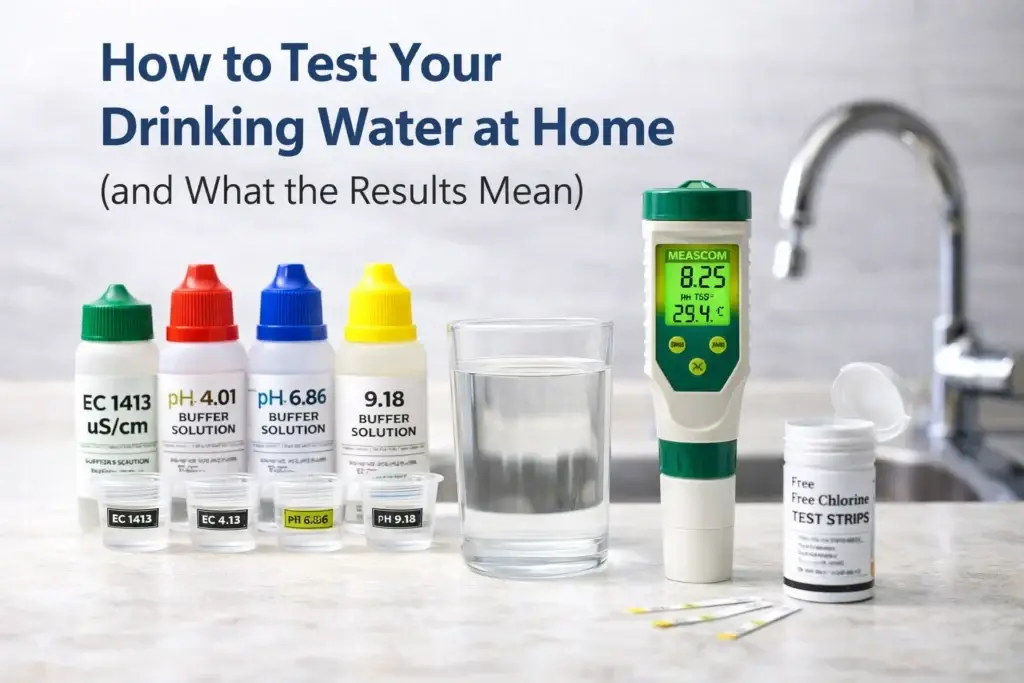
This article explains how to test drinking water at home and why it is so important.
Have you ever wondered what’s actually in your drinking water?
Water can look clear and still contain dissolved minerals, chlorine, or other substances that affect taste, odour, and long-term quality. Whether you use town supply or rainwater, testing your water at home is a simple way to gain confidence in what you’re drinking every day.
In this guide, we’ll show you how to test your drinking water at home — and how to understand what the results mean.
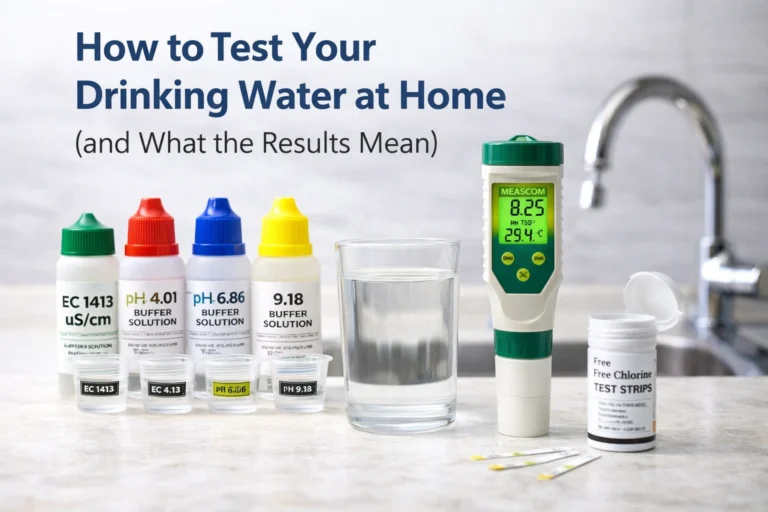
The best way to test drinking water at home is using a calibrated test kit that measures pH, TDS and chlorine, providing accurate and reliable results you can trust.
Why test your drinking water?
There are a few common reasons people choose to test their water:
- Changes in taste or smell
- Use of rainwater tanks or rural supply
- After installing or replacing filters
- Moving into a new home
- General peace of mind
Even small changes in water quality can indicate underlying issues — and testing helps you identify them early.
What should you test in drinking water?
For a quick and practical assessment, three key parameters give you a good overall picture:
1. pH (Acidity / Alkalinity)
pH indicates how acidic or alkaline your water is.
- Typical drinking water range: 6.5 – 8.5
- Low pH (acidic) can affect taste and plumbing
- High pH (alkaline) can also impact taste
2. Total Dissolved Solids (TDS)
TDS measures the amount of dissolved salts and minerals in your water.
- Low TDS: generally fresh, clean taste
- High TDS: may indicate elevated minerals or contaminants
3. Chlorine (Disinfection)
Chlorine is commonly used to disinfect drinking water.
- Small amounts indicate water is being treated
- High levels can affect taste and odour
- No chlorine may occur in tank or filtered water
How to test your water at home
Testing your water doesn’t require a laboratory.
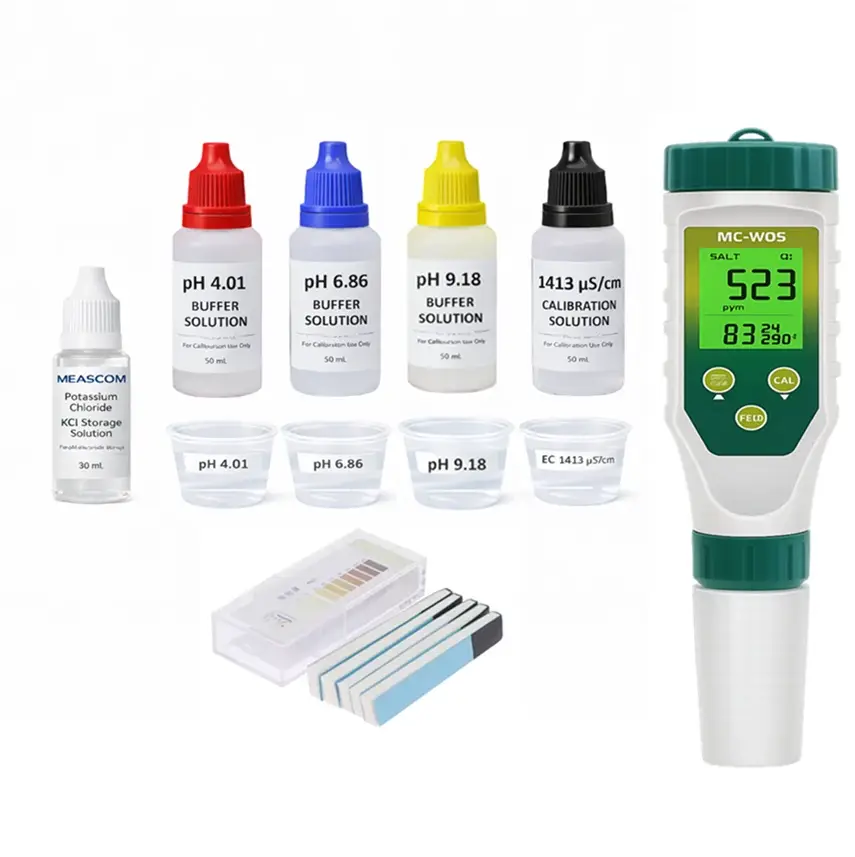
A simple home test kit allows you to:
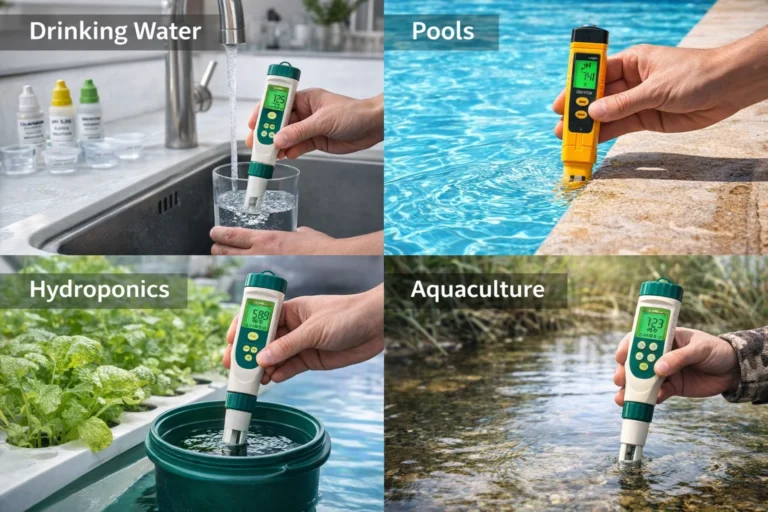
- Measure pH and TDS using digital a meter.
- Check chlorine using test strips.
- Compare results to typical drinking water ranges.
The process usually takes just a few minutes.
How to understand your results
Here’s a simple guide:
- pH 6.5 – 8.5 → Normal
- Low pH → Slightly acidic (may affect taste)
- High TDS → May affect taste or indicate elevated minerals
- Chlorine present → Water is disinfected
- No chlorine → Common in tank water or filtered systems
If your results fall slightly outside typical ranges, it doesn’t necessarily mean your water is unsafe — but it may indicate that further investigation or treatment could be beneficial.
For more information see The Australian Drinking Water Guidelines
What to do if your water is outside normal ranges
Depending on your results, you may consider:
- Carbon filtration (for taste and chlorine)
- Reverse osmosis (for high dissolved solids)
- Further testing (for specific concerns)
- Regular monitoring over time
How accurate are home water test kits?
Not all home test kits are the same.
Basic test strips provide a quick indication, but more advanced kits use calibrated instruments to give more reliable results.
If you want greater confidence in your measurements, it’s worth using a kit designed for accuracy rather than approximation.
What is considered safe drinking water?
Drinking water quality is typically assessed using guidelines such as the
Australian Drinking Water Guidelines,
which define acceptable ranges for parameters like pH and disinfectants.
Get clarity on your water
Testing your drinking water at home is one of the simplest ways to understand what you’re consuming every day.
If you want accurate results and clear guidance on what they mean, a calibrated home testing kit can give you the confidence to make informed decisions about your water.