Introduction
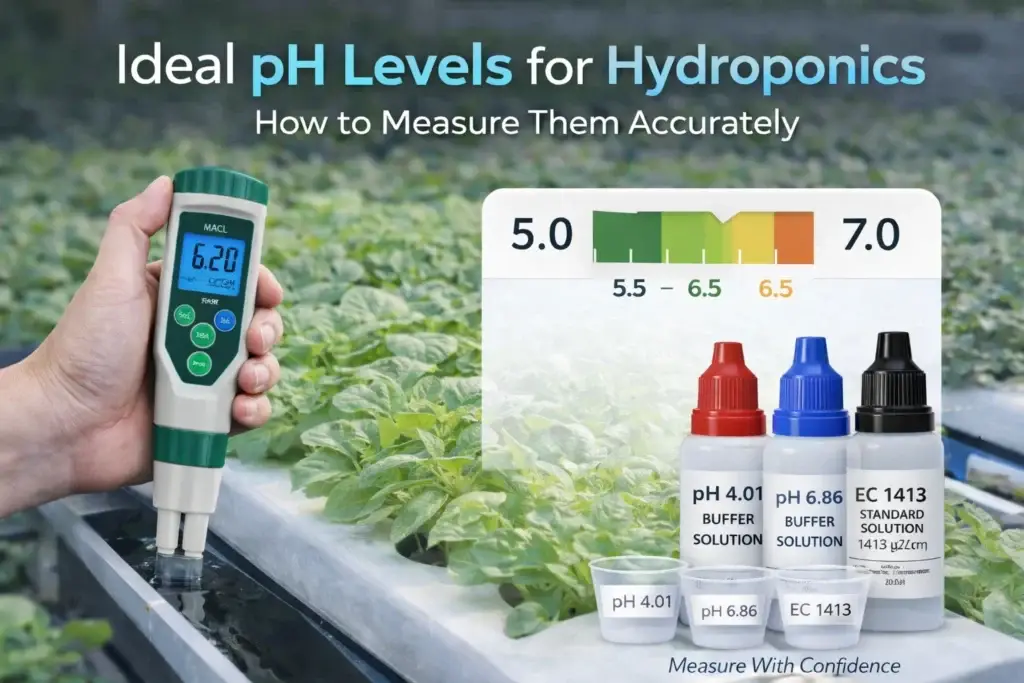
This article covers the ideal pH levels in Hydroponics. pH is one of the most important measurements in hydroponic systems because it directly affects nutrient availability. Even when the correct fertilisers are present, plants may struggle to absorb them if the pH moves outside the optimal range.
Monitoring pH regularly allows hydroponic growers to maintain stable nutrient conditions and prevent nutrient deficiencies or toxicities.
In this article we explain what pH means in hydroponics, the ideal pH ranges for plant growth, and how to measure pH accurately.
What pH Means in Hydroponics
pH measures how acidic or alkaline a liquid solution is.
The pH scale ranges from 0 to 14:
- pH 7 is neutral
- values below 7 are acidic
- values above 7 are alkaline
In hydroponic systems, pH affects how nutrients dissolve and how easily plant roots can absorb them. If the pH moves too far from the optimal range, certain nutrients may become unavailable to the plant even when they are present in the solution.
Ideal pH Range for Hydroponic Systems
Most hydroponic crops grow best when the nutrient solution remains within the following pH range.
| Crop | Recommended pH Range |
|---|---|
| Lettuce | 5.5 – 6.5 |
| Spinach | 6.0 – 6.5 |
| Tomatoes | 5.5 – 6.5 |
| Cucumbers | 5.5 – 6.0 |
| Strawberries | 5.5 – 6.2 |
| Peppers | 5.8 – 6.5 |
| Herbs | 5.5 – 6.5 |
These pH ranges are widely used guidelines for hydroponic nutrient solutions, although the optimal value may vary slightly depending on plant variety and growth stage.
Why pH Levels Matter for Hydroponics Nutrient Uptake
The availability of key nutrients changes depending on the pH of the solution.
When pH remains within the optimal range:
- nitrogen, phosphorus and potassium remain available
- micronutrients such as iron and manganese can be absorbed efficiently
- plant roots can take up nutrients effectively
If the pH becomes too high or too low, certain nutrients may become chemically unavailable to plants. This condition is often called nutrient lockout.
What Happens When Hydroponic pH Is Too High or Too Low
Maintaining pH within the correct range is essential for plant health.
pH Too Low
If the nutrient solution becomes too acidic, plants may experience:
- root stress
- slowed growth
- nutrient imbalance
pH Too High
When pH becomes too alkaline, several micronutrients become difficult for plants to absorb.
Possible effects include:
- yellowing leaves
- iron deficiency symptoms
- reduced plant growth
Regular pH monitoring allows growers to correct these issues before they affect crop performance.
How to Measure Hydroponic pH Correctly
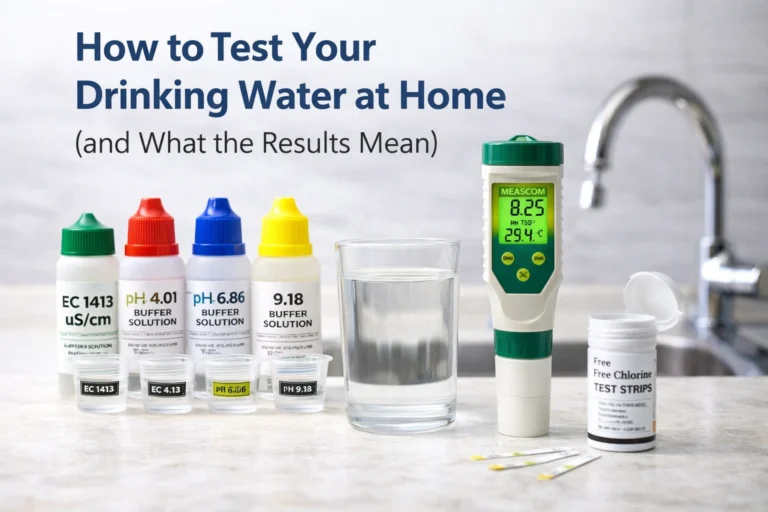
Measuring pH in a hydroponic nutrient solution is simple with a reliable pH tester.
Typical measurement steps include:
- Rinse the probe with clean water
- Place the probe in the nutrient solution
- Allow the reading to stabilise
- Record the pH value
For reliable results:
- calibrate the meter regularly
- rinse probes after each use
- store pH probes in storage solution
Accurate measurement helps maintain stable nutrient conditions in hydroponic systems.
Choosing a pH Meter for Hydroponics
For most growers, a handheld pH tester provides the simplest and most practical way to monitor nutrient solutions.
Common options include:
- pen-style pH testers for quick measurements
- multi-parameter meters that measure pH, EC, TDS and temperature
Using these modestly priced reliable pH and combined instruments allows growers to monitor water quality accurately and maintain consistent nutrient conditions.
pH and EC Work Together in Hydroponics
Successful hydroponic systems require monitoring both pH and electrical conductivity (EC).
EC measures the concentration of dissolved nutrients, while pH determines how easily plants can absorb those nutrients.
For a complete understanding of nutrient solution management, see our guide to:
Ideal EC Levels for Hydroponics
FAQ’s
What is the ideal pH for hydroponics?
Most hydroponic crops grow best when the nutrient solution pH remains between 5.5 and 6.5.
Can hydroponic pH be too high?
Yes. When pH rises above about 6.5–7.0, several micronutrients become less available to plants and nutrient deficiencies may occur.
Can hydroponic pH be too low?
Yes. If pH falls below about 5.0, roots may experience stress and nutrient uptake can be disrupted.
How often should hydroponic pH be checked?
Most growers measure pH daily or every few days, depending on the stability of the nutrient solution.
For further reading on the imporetance of pH in hydroponics see: Hydroponics nutrient pH guidelines
Maintaining the correct pH range is essential for healthy hydroponic plant growth. With regular pH monitoring and occasional calibration, hydroponic growers can maintain stable nutrient solutions and support consistent plant performance throughout the growing cycle.
How to Calibrate a pH Meter Correctly
Measure With Confidence